
Does a Dentist Do Root Canals?
What to Know About Care
Quick Answer
Does a dentist do root canals?
Yes. Many general dentists provide root canal treatment for teeth with inflamed, infected, or damaged pulp. Some cases are more complicated and may be referred to an endodontist, a specialist with additional training in treating the inside of teeth.
Key Takeaways
- General dentists may perform routine root canals.
- Complex cases may require an endodontist.
- Root canal therapy can help preserve a natural tooth.
- An exam and X-rays help guide treatment decisions.
- Persistent tooth pain or swelling should be evaluated.
When a tooth starts causing ongoing discomfort, you may wonder who can treat the problem. Do dentists do root canals, or is this care only available from a specialist?
General dentists receive training in diagnosing and treating many conditions involving the teeth and surrounding tissues. Root canal care is part of that training, although whether a dentist provides the procedure may depend on the tooth, the complexity of its canals, and the dentist’s experience.
Do Dentists Perform Root Canals?
Yes. A general dentist may perform a root canal when the case can be appropriately managed in their office. But do all dentists do root canals? No. Some dentists provide this treatment regularly, while others refer patients to an endodontist.
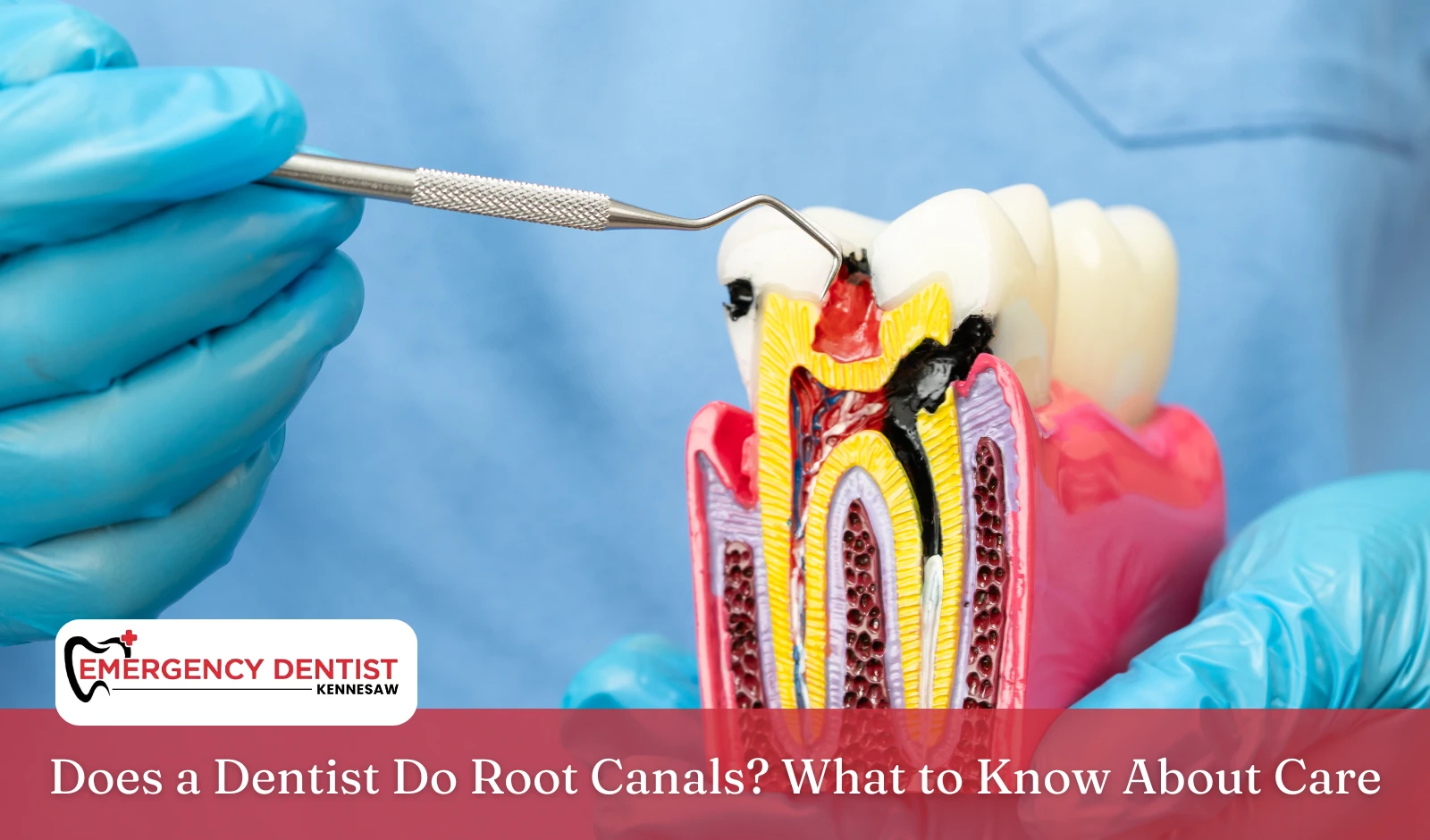
Inside each tooth is soft tissue called the pulp, which contains nerves, blood vessels, and connective tissue. Deep decay, cracks, or injuries can allow bacteria to reach the pulp. An infected tooth may cause tooth pain, swelling, sensitivity, or discomfort when biting or chewing.
When Would I Need a Dentist or Endodontist?
Whether you see a dentist or an endodontist depends on the tooth and the treatment needed. General dentists often handle straightforward cases. Endodontists have advanced education in endodontic treatment and conditions affecting the pulp and root canals.
A referral may be recommended when the canals have an unusual shape, the tooth has been treated before, or other factors make the case more difficult.
What Is Involved in a Root Canal Procedure?

Before performing the procedure, the dentist examines the tooth and may take X-rays to look at the roots and surrounding bone. Local anesthesia is generally used to numb the area.
To perform a root canal, the dentist makes an opening in the tooth to access the pulp chamber. A protective sheet called a dental dam is placed around the tooth to keep the treatment area isolated and dry.
The dentist removes infected or damaged tissue from the tooth, including unhealthy pulp inside the canals. The canals are cleaned, shaped, filled, and sealed.
After the root canal procedure, the tooth may need a crown, filling, or another type of dental restoration for added protection.
How Can Root Canal Therapy Help?
The goal of root canal therapy is to remove unhealthy tissue from inside the tooth while preserving the natural tooth when possible. Keeping the tooth can help with normal chewing and support your oral health.
If the tooth is too damaged to restore, extraction may be considered. Depending on your needs, a dental implant may be one option for replacing the missing tooth.
Final Thoughts
Root canal treatment can address infection, inflammation, or damage within a tooth while helping preserve teeth that can still be restored. A dental evaluation can determine whether your case can be treated by a general dentist or would benefit from specialist care.
Find the Cause of Your Tooth Discomfort
A painful or sensitive tooth can have several possible causes. Emergency Dentist in Kennesaw can evaluate the affected tooth, review your symptoms, and discuss treatment based on the findings. Contact the office if tooth pain, swelling, or sensitivity persists or becomes more severe.
Frequently Asked Questions
Can my regular dentist start my root canal treatment?
Possibly. Your dentist will first evaluate the tooth and determine what care is needed. Depending on the case and the services they provide, they may perform the treatment or refer you to an endodontist.
Why is my tooth sensitive to hot and cold?
Temperature sensitivity can have several causes, such as decay, worn enamel, cracks, or problems involving the pulp. A dental examination can help determine what is causing it.
Can an old filling cause me to need a root canal?
A tooth with an older filling may eventually develop decay, cracks, or pulp damage, but this does not mean every old filling leads to a root canal. An examination can determine the condition of the tooth.
Will I be awake during a root canal?
Usually, yes. Local anesthesia is commonly used to numb the tooth and surrounding area while the procedure is performed.
How do I know if my tooth can still be saved?
Your dentist will consider the amount of healthy tooth structure remaining, the condition of the roots, and other findings. These factors help determine whether root canal treatment and restoration are possible.