
Is Wisdom Tooth Infection an Emergency? When to Act
Quick Answer
Is wisdom tooth infection an emergency if pain comes and goes?
Yes. Even when symptoms feel mild or inconsistent, a wisdom tooth infection can still require emergency dental care, especially if there’s a risk of infection from spreading.
Key Takeaways
- Wisdom tooth infection is often linked to impacted wisdom teeth
- Symptoms can escalate quickly when left untreated
- Bad breath, swelling, and pain and discomfort are common warning signs
- Some cases require emergency treatment
- Early care helps protect oral health and prevent further complications
Why This Question Comes Up So Often
If you’re noticing swelling, pressure, or a strange taste near the back of your mouth, it’s normal to ask, is wisdom tooth infection an emergency? Wisdom teeth frequently cause uncertainty because symptoms don’t always appear severe right away.
Since wisdom teeth sit at the very back of the mouth, they’re harder to clean thoroughly with brushing and flossing alone. Food particles and bacteria can build up unnoticed. A wisdom tooth infection may start quietly, but when left untreated, it can progress faster than expected and affect your dental health.
Understanding when a wisdom tooth problem requires immediate attention can help you avoid more serious issues and protect your long-term oral health.
What Is a Wisdom Tooth Infection
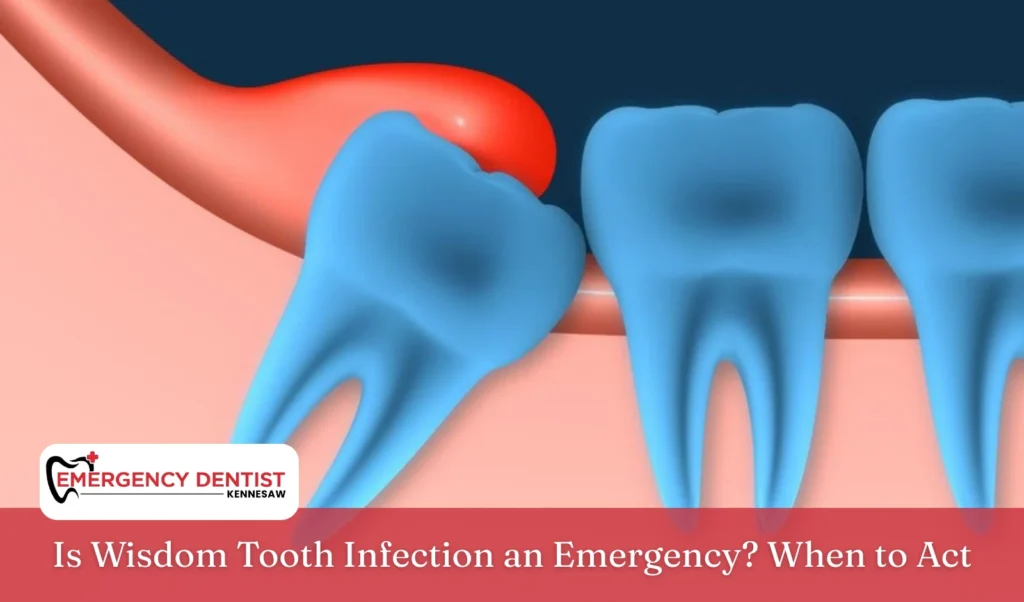
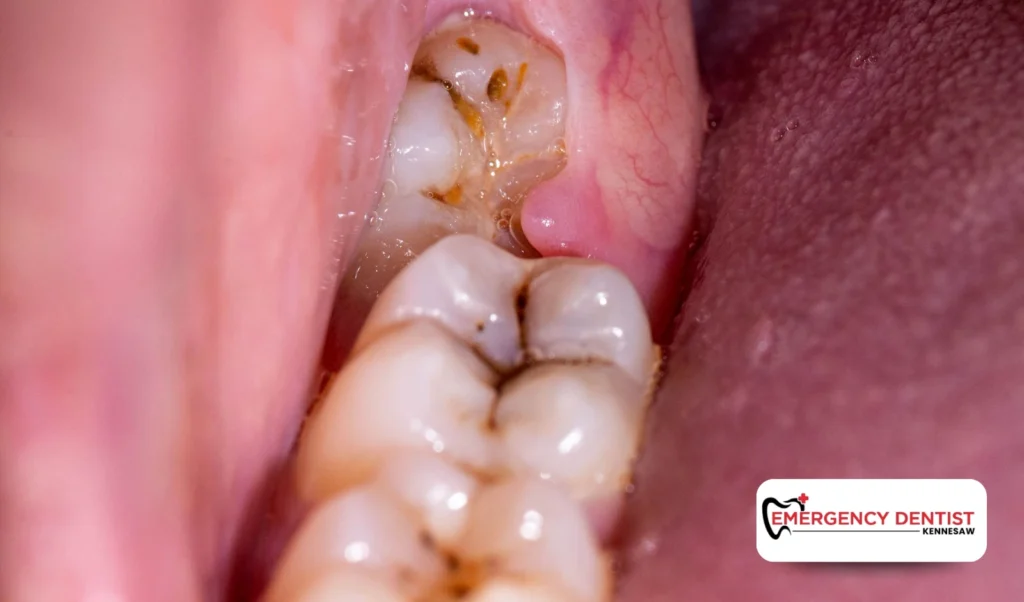
A wisdom tooth infection develops when bacteria collect around a wisdom tooth, often due to an impacted wisdom tooth. Impacted wisdom teeth do not fully erupt through the gums or may grow at an angle.
When part of the tooth remains covered by gum tissue, a pocket forms. This pocket traps food particles and bacteria, even in people with good oral hygiene habits. Over time, bacteria irritate the gums, leading to swelling, pain and discomfort, and infection.
In some cases, wisdom tooth infection is also connected to gum disease or decay affecting nearby teeth.
Why Wisdom Teeth Get Infected More Easily
Wisdom teeth are especially vulnerable because of their location and limited space. Several factors increase infection risk, including:
- Impacted wisdom teeth beneath the gums
- Partial eruption that creates hard-to-clean areas
- Crowding that limits proper brushing and flossing
- Food particles collecting behind the molars
- Inflammation related to gum disease
Because of these challenges, wisdom tooth infection is one of the most common reasons patients contact an emergency dentist.

Signs a Wisdom Tooth Infection Requires Immediate Attention
Not every infection causes severe pain at first. Some symptoms develop gradually and worsen over time. Warning signs that may require emergency care include:
- Persistent pain and discomfort near the back teeth
- Swollen, tender, or bleeding gums
- Difficulty opening your mouth fully
- Ongoing bad breath or a foul taste
- Pressure or throbbing pain that increases
- Swelling that spreads toward the jaw or cheek
If symptoms are worsening instead of improving, the situation may require emergency treatment.
Is an Infected Wisdom Tooth an Emergency
So, is an infected wisdom tooth an emergency? The answer depends on severity and progression.
A mild infection caught early may be managed with timely dental care. However, when swelling increases, pain worsens, or symptoms spread, the infection often requires emergency attention.
When left untreated, bacteria can move below the gum line and into surrounding tissue. This raises the risk of infection from spreading, increases pain and discomfort, and complicates treatment. In more advanced cases, emergency wisdom tooth removal may be recommended to protect your oral health.
Dentists consistently stress early treatment to prevent avoidable complications.
What Happens If a Wisdom Tooth Infection Is Left Untreated
Ignoring a wisdom tooth infection can lead to several problems, including:
- Increasing pain and discomfort
- Worsening gum disease
- Pressure or damage to nearby teeth
- Higher risk of infection spreading
- More complex emergency dental treatment
In many cases, delaying care makes wisdom teeth removed the safest option for protecting long-term dental health.
How Dentists Treat Wisdom Tooth Infections
Treatment depends on how advanced the infection is and whether the tooth can be saved. Options may include:
- Cleaning around the infected area to reduce bacteria
- Reducing inflammation and irritation
- Monitoring healing and symptoms
- A root canal in select cases where the tooth is salvageable
- Planning for wisdom teeth removed if the tooth cannot be protected
When symptoms are severe or the infection is spreading, emergency wisdom tooth removal may be necessary to prevent further complications.
What You Can Do While Waiting for Care
Home care cannot cure an infection, but it may help reduce irritation temporarily:
- Gently rinsing to clear food particles
- Maintaining careful brushing and flossing
- Avoiding chewing on the affected side
- Keeping the area as clean as possible
These steps may help manage discomfort but do not replace professional evaluation by an emergency dentist.
When to Contact an Emergency Dentist in Kennesaw
You should contact an Emergency Dentist in Kennesaw if:
- Pain continues or becomes more intense
- Swelling spreads or increases
- You struggle to open your mouth
- Symptoms interfere with eating or sleeping
- You’re unsure whether the situation requires emergency care
Prompt treatment supports oral health and helps prevent further complications.
Final Thoughts
A wisdom tooth infection should never be ignored. While not every case is an emergency, worsening symptoms, swelling, and ongoing pain often signal a problem that requires immediate attention. Acting early can help prevent further complications and protect your comfort, your smile, and your dental health.
Fast Relief for Wisdom Tooth Infections in Kennesaw
Worried Your Wisdom Tooth Infection Is Getting Worse?
If you’re dealing with swelling, pain, or signs of infection, an Emergency Dentist in Kennesaw is ready to help. Our team provides prompt emergency treatment focused on stopping infection, easing discomfort, and guiding you toward the safest next steps.
Don’t wait for symptoms to escalate. Contact an Emergency Dentist in Kennesaw today and get the care your smile needs, right when it matters most.
Frequently Asked Questions
My wisdom tooth only hurts a little. Should I worry?
Yes. Mild pain can be an early sign of infection and may worsen if left untreated.
Do infected wisdom teeth always need to be removed?
Not always. Some infections respond to treatment, but many cases involve wisdom teeth removed to prevent repeat issues.
Can gum disease make a wisdom tooth infection worse?
Yes. Gum disease increases inflammation and makes it easier for bacteria to spread, which can worsen infections.